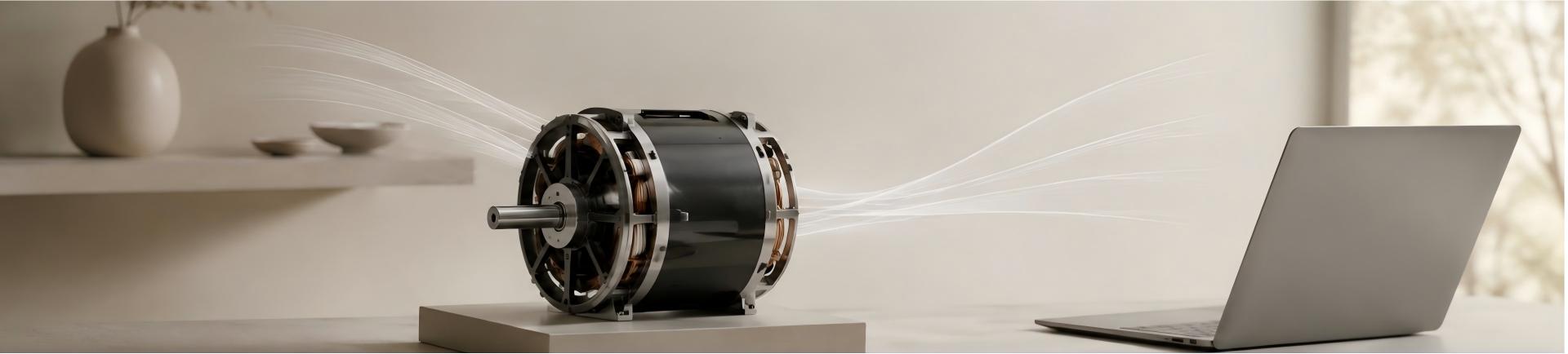
Replacing a kitchen exhaust fan motor typically costs approximately $200–$700 in the United States, including parts and professional labor. Actual costs depend on the motor type, range hood model, installation difficulty, and whether the replacement requires a complete blower assembly.
The total replacement cost includes the motor, labor, and any additional components required for installation.
A basic residential exhaust fan motor may cost considerably less than a specialized motor with integrated electronic controls.
The final price also depends on how easily the technician can access the motor inside the range hood.
For appliance manufacturers and replacement-parts distributors, understanding these cost factors helps determine whether motor replacement or complete equipment replacement is more economical.
The following estimates illustrate possible residential repair costs in the U.S. market.
| Cost Item | Approximate Cost |
|---|---|
| Basic Replacement Motor | $80–$250 |
| Professional Labor | $100–$300 |
| Specialized Motor Assembly | $150–$450 or More |
| Typical Complete Replacement | $200–$700 |
These figures are indicative rather than fixed prices. Premium range hoods, complex installations, and specialized electronic motor assemblies may cost more.
For commercial kitchen exhaust systems, pricing should be obtained separately because motor capacity, installation requirements, and equipment structures can differ substantially.
A faulty motor may produce several symptoms.
01 - The exhaust fan does not start.
02 - Airflow becomes noticeably weaker.
03 - The motor produces grinding or humming noises.
04 - The fan operates intermittently.
05 - The motor overheats or stops unexpectedly.
06 - The fan fails to respond correctly to speed controls.
However, these symptoms do not always indicate motor failure.
Grease accumulation, damaged fan blades, blocked ducts, defective switches, and control-board problems can produce similar symptoms.
A qualified technician should identify the actual cause before replacing the motor.
Motor replacement can be economical when the existing range hood remains in good structural condition.
If the housing, fan blade, controls, and duct connections are functioning properly, replacing the defective motor may restore normal ventilation without purchasing an entirely new appliance.
However, complete replacement may be more practical when the range hood has extensive damage, obsolete components, or multiple electrical faults.
For manufacturers, designing exhaust fans with accessible and replaceable motor components can improve long-term serviceability.
Brushless DC motors can provide energy-efficiency advantages compared with certain conventional motor designs when correctly matched to the application.
They use electronic commutation instead of mechanical brushes, allowing more flexible speed control.
For ventilation products operating for extended periods, improved motor efficiency can help reduce electricity consumption.
However, actual savings depend on the motor's efficiency, operating speed, fan load, driver performance, and usage duration.
Our Kitchen Exhaust Fan Motor includes compact 24V motor configurations developed for suitable residential ventilation equipment.
For appliance repair distributors and exhaust fan manufacturers, compatibility is more important than choosing the lowest-priced motor.
Important specifications include:
01 - Rated voltage and power
02 - Motor diameter and installation dimensions
03 - Shaft diameter and length
04 - Rated speed and rotation direction
05 - Starting torque requirements
06 - Driver and control-board compatibility
07 - Fan blade and housing dimensions
08 - Noise and temperature performance
09 - Electrical safety requirements
10 - Expected purchasing quantity
A motor with the correct voltage may still be unsuitable if its shaft, mounting points, or torque characteristics do not match the original equipment.
At HUALIDA, our manufacturing activities focus on brushless DC motors and matched control solutions for different fan applications.
Our production process includes motor winding, assembly, electrical inspection, noise testing, and product performance verification.
We understand that replacement compatibility depends on the complete motor configuration.
For OEM projects, our team can discuss motor dimensions, winding parameters, speed requirements, mounting structures, and driver compatibility.
Our Exhaust Fan Motor Collection provides additional options for ventilation equipment manufacturers and component distributors.
HUALIDA supplies BLDC motor solutions for ventilation equipment manufacturers, appliance component distributors, and OEM/ODM projects.
Our team can review existing motor specifications, required voltage, dimensions, fan load, and production quantities to recommend a suitable configuration.
Request an Exhaust Fan Motor Quotation